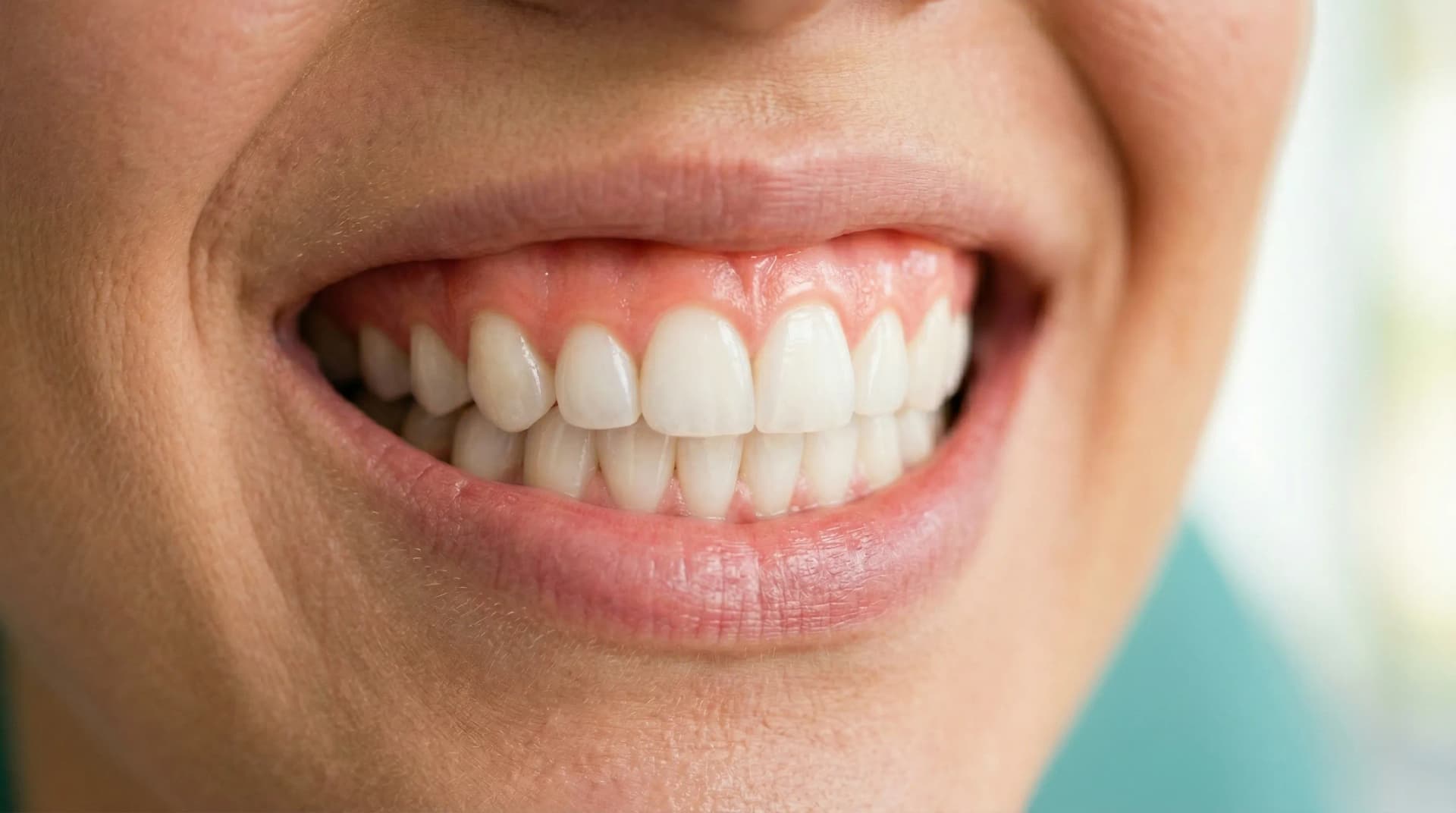
Dental fluorosis is a developmental condition caused by excessive fluoride intake during the years when teeth are forming (typically birth to age 8). It appears as white spots, streaks, or — in severe cases — brown staining and pitting of the enamel. Fluorosis is a cosmetic concern, not a disease, and does not weaken teeth. It can only occur during tooth development and cannot develop in adults.
What Is Dental Fluorosis?
Dental fluorosis is a change in the appearance of tooth enamel caused by excess fluoride exposure during the critical period of tooth development. The fluoride disrupts the normal process of enamel mineralization, resulting in hypomineralized areas that appear as white opacities, streaks, or — in more severe forms — pitting and brown discoloration.
It is important to understand that fluorosis is purely cosmetic. Fluorotic teeth are not weaker or more susceptible to decay; in fact, mild fluorosis may actually be associated with slightly increased caries resistance due to the fluoride incorporated into the enamel.
According to CDC data, approximately 25% of the U.S. population aged 6-49 has some degree of dental fluorosis, though the vast majority (over 90% of cases) fall in the mild or very mild categories, which may not even be noticeable without careful examination (Journal of Dental Research, 2018).
Causes and Risk Factors
Dental fluorosis can only develop during tooth formation. The critical window is from birth to approximately age 8, when permanent teeth are actively mineralizing beneath the gums. Sources of excess fluoride in children include:
- Swallowing fluoride toothpaste — Young children who swallow toothpaste instead of spitting it out may ingest significant amounts of fluoride
- Fluoride supplements — If prescribed in areas with already fluoridated water
- Fluoridated water in combination with other sources — When multiple fluoride sources accumulate
- Infant formula reconstituted with fluoridated water — Can contribute to total fluoride intake
- Fluoride-containing mouthwash — Not recommended for children under 6 due to swallowing risk
Risk factors:
- Age under 8 (developing teeth)
- Multiple concurrent sources of fluoride
- Living in areas with naturally high fluoride levels in groundwater
- Using adult-strength fluoride toothpaste in very young children
Symptoms
The appearance of dental fluorosis ranges from subtle to obvious, classified by severity:
- Questionable — Slight changes in enamel translucency, barely noticeable
- Very mild — Small, opaque white areas scattered across less than 25% of the tooth surface
- Mild — White opaque areas covering up to 50% of the surface
- Moderate — All enamel surfaces affected; frequent brown staining and some wear
- Severe — Widespread pitting, brown discoloration, and corroded appearance; enamel may be fragile
The vast majority of fluorosis in developed countries is very mild to mild, often appearing as faint white lines or specks that are barely visible to the untrained eye. Severe fluorosis is rare in areas with regulated water fluoridation.
It is worth noting that white spots on teeth can also be caused by other factors. Our article on white spots on teeth covers the various causes and how to tell them apart.
Treatment and Prevention
Treatment is cosmetic and depends on severity:
- Very mild to mild — No treatment necessary; many people are unaware they have it. Teeth whitening may help even out the appearance by reducing the contrast between white spots and surrounding enamel.
- Moderate — Professional treatments such as microabrasion (gently removing the outer layer of affected enamel), dental bonding, or resin infiltration can improve appearance
- Severe — Porcelain veneers or crowns may be recommended to cover significant cosmetic defects
Prevention focuses on appropriate fluoride use in children:
- Use only a rice-grain-sized smear of fluoride toothpaste for children under 3
- Use a pea-sized amount for children ages 3-6
- Supervise brushing and teach children to spit out toothpaste
- Do not give fluoride supplements without first checking fluoride levels in your drinking water
- Consult your pediatric dentist about appropriate fluoride use based on your child's total fluoride exposure
- Store fluoride toothpaste out of children's reach
Research in Community Dentistry and Oral Epidemiology (2019) reinforces that fluoride remains one of the most effective tools for preventing tooth decay. The goal is not to eliminate fluoride but to use it at appropriate levels — enough to protect teeth, not so much that fluorosis develops.
If you have concerns about fluorosis on your teeth or your child's teeth, consult your dentist to discuss the severity and available cosmetic options.