White spots on teeth have several different causes — and the cause determines both the urgency and the treatment. Early demineralization (pre-cavity white spots) is the most important to identify because it's reversible with prompt intervention. Fluorosis and enamel hypoplasia are developmental conditions that are cosmetic but not progressive. Proper diagnosis by a dental professional is essential because the treatments are completely different depending on the underlying cause.
You notice a chalky white patch on your tooth — or your child comes home from the orthodontist with white marks around where the brackets were. White spots on teeth are one of the most common dental cosmetic concerns, and they're also one of the most confusing because the same visible symptom can have very different causes.
Some white spots are early warning signs of active decay that need immediate attention. Others are permanent but harmless developmental marks. Knowing the difference is critical because the treatment approaches are entirely different.
What Causes White Spots on Teeth?
1. Early Demineralization (Pre-Cavity Lesions)
This is the most clinically important cause of white spots. When acid-producing bacteria feed on sugars, they produce acids that dissolve minerals from the enamel surface. Before a cavity (actual hole) forms, the area of mineral loss appears as a chalky, opaque white spot that looks distinctly different from the surrounding glossy enamel.
These white spot lesions represent Stage 1 of the cavity process — and they are the only stage where natural reversal through remineralization is possible. Emerging research also suggests that probiotics may help prevent cavities by shifting the bacterial balance away from acid-producing species. A landmark study by Fejerskov in Community Dentistry and Oral Epidemiology (1997) established that white spot lesions are the earliest clinically detectable sign of caries and that arresting or reversing them prevents cavity formation.
How to recognize demineralization white spots:
- They appear on tooth surfaces where plaque accumulates (near the gumline, between teeth)
- The surface may feel slightly rougher than surrounding enamel
- They're often more visible when the tooth is dry
- They may be new — you didn't always have them
This type of white spot requires action. Left alone, demineralization progresses to cavitation. Consult your dentist to confirm the diagnosis and begin a remineralization protocol.
2. Fluorosis
Dental fluorosis occurs when developing teeth (typically before age 8) are exposed to excessive fluoride during the enamel formation process. The fluoride disrupts the normal mineralization of enamel, creating visible white marks.
Fluorosis is classified by severity:
- Questionable/Very mild — Tiny white specks or streaks, visible only to a trained observer. Affects less than 25% of the tooth surface.
- Mild — White opaque areas covering less than 50% of the surface. Easily visible but cosmetic only.
- Moderate — White opaque areas covering most of the surface, sometimes with light brown staining.
- Severe — Generalized white/brown discoloration with pitting and surface breakdown. Relatively rare.
According to the CDC's National Health and Nutrition Examination Survey, approximately 23% of Americans aged 6-49 have some degree of fluorosis, with the vast majority being very mild or mild — cosmetically negligible and not harmful to tooth structure.
How to recognize fluorosis:
- Present on teeth since they erupted — not new
- Typically symmetrical (same pattern on matching teeth on both sides)
- Diffuse, lacy white patterns rather than distinct patches
- More common on permanent teeth that developed during peak fluoride exposure years
- Not progressive — the spots don't get worse over time
Common fluoride sources that may contribute: fluoridated water, swallowing fluoride toothpaste during childhood, fluoride supplements given inappropriately, and infant formula made with fluoridated water.
3. Enamel Hypoplasia
Enamel hypoplasia is a developmental defect in which the enamel forms thinner or less completely than normal. It can appear as white spots, pits, grooves, or areas of missing enamel. Unlike fluorosis, hypoplasia results from a disruption during enamel development that is not fluoride-related.
Causes of enamel hypoplasia include:
- Premature birth — Premature infants have higher rates of enamel defects, particularly on primary teeth and first permanent molars. A review in Pediatric Dentistry (2011) found enamel hypoplasia prevalence of 20-96% in premature infants.
- Childhood illness with high fever — Severe illness during the years of tooth development can disrupt ameloblast (enamel-forming cell) activity
- Nutritional deficiency during tooth development — Particularly vitamins A, C, and D, and calcium. These same deficiencies can also weaken gum tissue and contribute to bleeding gums later in life.
- Trauma to primary teeth — Can affect the developing permanent tooth underneath
- Celiac disease — Enamel defects are a recognized feature of celiac disease, affecting up to 80% of patients with the condition (BMC Gastroenterology, 2012)
How to recognize hypoplasia:
- May affect individual teeth rather than showing a symmetrical pattern
- Can include pitting or grooves in addition to white spots
- Present since tooth eruption
- Affected areas may be more susceptible to decay due to thinner enamel
4. Orthodontic Decalcification
White spots after braces are one of the most common and frustrating cosmetic outcomes of orthodontic treatment. They occur because brackets and wires create areas where plaque is difficult to remove, leading to localized demineralization around the brackets.
The prevalence is striking: a systematic review in the American Journal of Orthodontics and Dentofacial Orthopedics (2010) found that 24-50% of orthodontic patients develop new white spot lesions during treatment. The spots typically appear on the facial (front) surfaces of upper front teeth, immediately surrounding where the brackets were bonded.
These are essentially the same as demineralization white spots (Cause #1) but with a specific, predictable pattern related to bracket placement.
Getting a Proper Diagnosis
Because the causes of white spots require different treatments, accurate diagnosis is essential. Your dentist will consider:
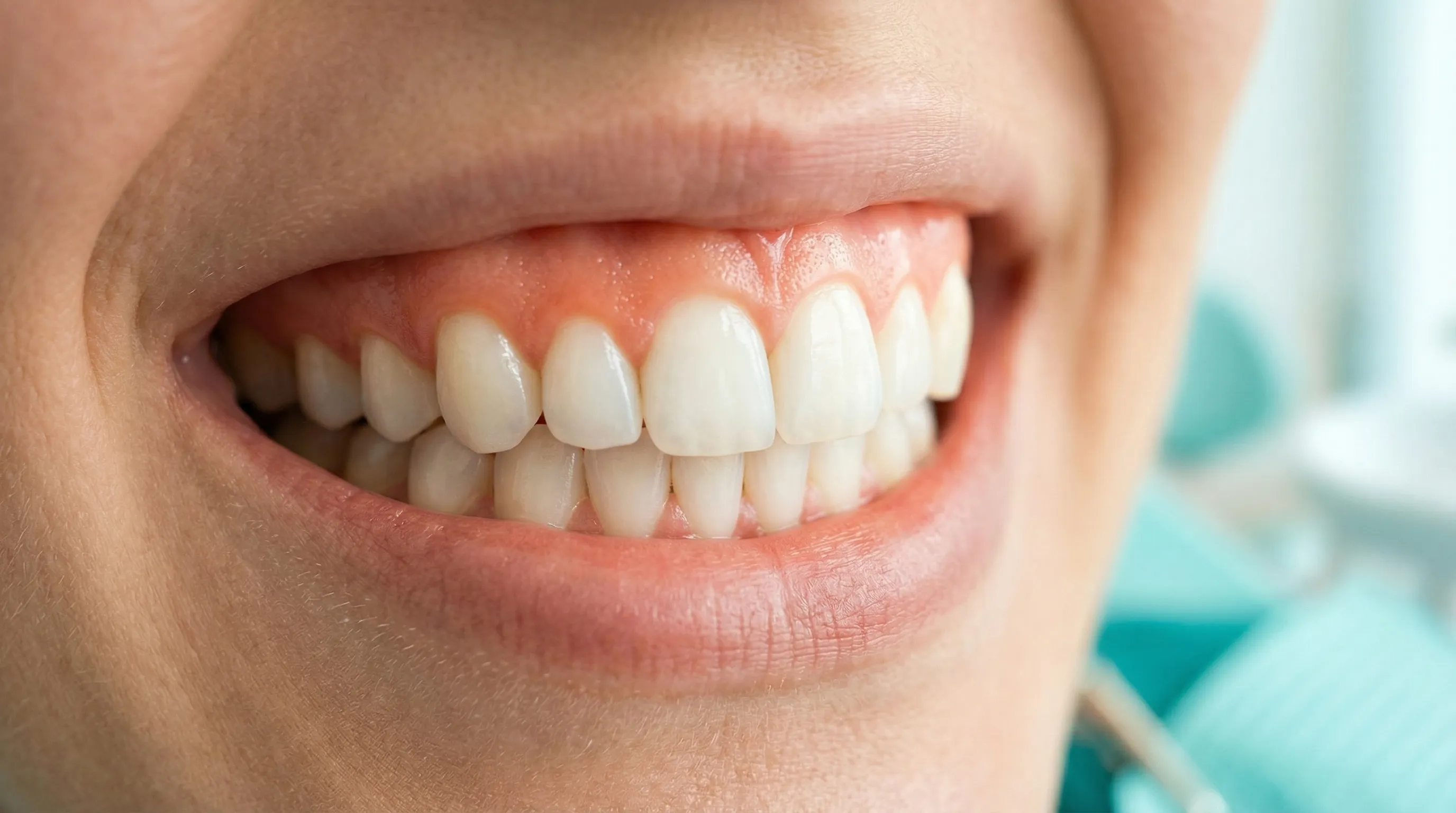
- History — When did the spots appear? Were they present since childhood, or are they new? Did you recently have braces?
- Pattern — Symmetrical (suggests fluorosis or systemic cause) vs. localized (suggests demineralization or hypoplasia)?
- Location — Near the gumline or between teeth (demineralization) vs. diffuse across the surface (fluorosis)?
- Surface texture — Smooth (fluorosis) vs. rough (demineralization or hypoplasia)?
- Activity — Progressing (active demineralization) vs. stable (arrested lesion, fluorosis, hypoplasia)?
Consult your dentist for any new white spots — particularly if you notice them developing, as this may indicate active demineralization that needs intervention.
Treatment Options
For Demineralization (Active White Spot Lesions)
The priority is stopping the decay process and promoting remineralization.
Fluoride therapy:
- Professional fluoride varnish (22,600 ppm) applied at dental visits — a Cochrane review (2013) confirmed that fluoride varnish reduces enamel demineralization by approximately 43%
- Prescription-strength fluoride toothpaste (5,000 ppm sodium fluoride) for daily use
- Fluoride mouthwash (0.05% sodium fluoride) at a time separate from brushing
Hydroxyapatite products: Nano-hydroxyapatite toothpaste deposits minerals directly onto the enamel surface. A study in Caries Research (2019) found that hydroxyapatite-based remineralizing agents significantly improved white spot lesion appearance in orthodontic patients.
Casein phosphopeptide-amorphous calcium phosphate (CPP-ACP): CPP-ACP (the active ingredient in MI Paste and MI Paste Plus) delivers bioavailable calcium and phosphate directly to the tooth surface. Research published in the Journal of Dental Research (2009) demonstrated that CPP-ACP promoted remineralization of subsurface enamel lesions.

Denticore
Gum & Tooth Support Supplement
Supporting your body's mineral balance may complement topical remineralization efforts. DentiCore is formulated to provide minerals that support enamel health from the inside out.
We may earn a commission if you make a purchase through our links, at no extra cost to you.
Oral hygiene optimization:
- Meticulous brushing technique, especially around white spot areas
- Daily flossing
- Xylitol gum (6+ grams per day) to reduce S. mutans populations
- Reducing sugar frequency in the diet
For Cosmetic White Spots (Fluorosis, Hypoplasia, Arrested Lesions)
Once a white spot is stable and no longer at risk of progressing, treatment becomes cosmetic. Several options are available, ranging from minimally invasive to restorative:
MI Paste (CPP-ACP): Even for non-active white spots, MI Paste may improve the appearance over time by promoting mineral exchange at the surface. Results are subtle and gradual, typically requiring several months of daily application. It's the most conservative option and worth trying first.
Microabrasion: This in-office procedure uses a paste containing hydrochloric acid and fine pumice to remove a thin layer of surface enamel — typically 25-200 micrometers. It's effective for superficial white spots (mild fluorosis, superficial decalcification) and preserves the vast majority of enamel.
A study in the British Dental Journal (2013) found microabrasion produced satisfactory results in 83% of mild fluorosis cases. The procedure is quick, painless, and relatively affordable.
Resin Infiltration (ICON)
Resin infiltration is a revolutionary minimally invasive technique specifically designed for white spot lesions. The procedure:
- The enamel surface is etched with hydrochloric acid to open the porous lesion
- A low-viscosity resin is applied that wicks into the demineralized area via capillary action
- The resin is light-cured, filling the micropores and restoring the tooth's optical properties
The result: the white spot effectively disappears because the resin replaces the air-filled voids that cause the chalky white appearance.
Research strongly supports resin infiltration. A randomized controlled trial in Quintessence International (2013) found that resin infiltration produced significant, lasting improvement in white spot appearance. A 2-year follow-up study in the Journal of Dentistry (2015) confirmed results remained stable over time.
Resin infiltration is particularly effective for:
- Post-orthodontic white spots
- Fluorosis (mild to moderate)
- Demineralization lesions that have been arrested but remain cosmetically bothersome
Dental Bonding: For deeper or more extensive white spots, your dentist can apply tooth-colored composite resin directly over the affected area. This effectively "covers" the white spot with material that matches the surrounding tooth color. Bonding is more involved than resin infiltration but works for larger or deeper defects.
Porcelain Veneers: For severe cases — particularly deep tetracycline staining with white banding, severe fluorosis, or extensive hypoplasia — porcelain veneers provide the most dramatic and durable cosmetic improvement. However, veneers are irreversible (enamel must be removed), expensive ($900-2,500 per tooth), and require eventual replacement.
Veneers are a last-resort cosmetic option, not a first-line treatment for white spots.
Preventing White Spots During Orthodontics
Given that up to half of orthodontic patients develop white spots, prevention during braces is critical.

For patients:
- Brush after every meal — food trapped around brackets accelerates demineralization
- Use an interdental brush or floss threader to clean between brackets and under wires
- Use fluoride mouthwash daily
- Avoid sugary and acidic foods and drinks during treatment
- Chew xylitol gum regularly
For orthodontic providers:
- Apply fluoride varnish at adjustment appointments — a meta-analysis in the European Journal of Orthodontics (2015) found that fluoride varnish applied every 6 weeks during orthodontic treatment reduced white spot incidence by approximately 42%
- Provide MI Paste for home use
- Use glass ionomer cement for bracket bonding (releases fluoride)
- Monitor for early signs of decalcification and intensify prevention when detected
The single most impactful action is rigorous oral hygiene. Patients who brush well around their brackets rarely develop white spots; those who don't brush adequately are at high risk regardless of other interventions.
Denticore
Gum & Tooth Support Supplement
Orthodontic patients face increased demands on their enamel during treatment. DentiCore's mineral support formula may help maintain the mineral balance that keeps enamel resilient during and after braces.
We may earn a commission if you make a purchase through our links, at no extra cost to you.
Prevention Beyond Orthodontics
General strategies to prevent demineralization white spots (applicable to everyone):
- Brush with fluoride toothpaste twice daily — spit but don't rinse for maximum fluoride contact time
- Floss daily to remove plaque from between teeth where white spots commonly develop
- Limit sugar frequency — each sugar exposure triggers 20-30 minutes of acid production
- Drink water as your primary beverage, especially fluoridated tap water
- Chew sugar-free gum after meals to stimulate remineralizing saliva
- Get regular dental checkups — dentists can detect demineralization before it becomes visible to you
For children specifically:
- Supervise toothpaste use (pea-sized amount for ages 3-6, rice-grain size for under 3) to prevent swallowing excess fluoride
- Provide fluoride-free water (bottled or filtered) for mixing infant formula if your water supply is fluoridated, to reduce fluorosis risk
- Ensure adequate calcium and vitamin D intake during the years of tooth development
The Bottom Line
White spots on teeth are a sign — not a diagnosis. The same white patch could represent active decay that needs urgent attention or a harmless developmental mark that's been present since childhood. The only way to know is to have a dental professional evaluate it.
If you notice new white spots, act quickly. Early demineralization is the one situation where you have a genuine window to reverse the process before a cavity forms. With fluoride, hydroxyapatite, CPP-ACP, good diet, and thorough oral hygiene, many white spot lesions can be arrested or reversed.
For white spots that are cosmetic concerns (fluorosis, hypoplasia, or arrested lesions after braces), modern treatments like resin infiltration and microabrasion offer minimally invasive, highly effective solutions that preserve tooth structure.
Related reading: