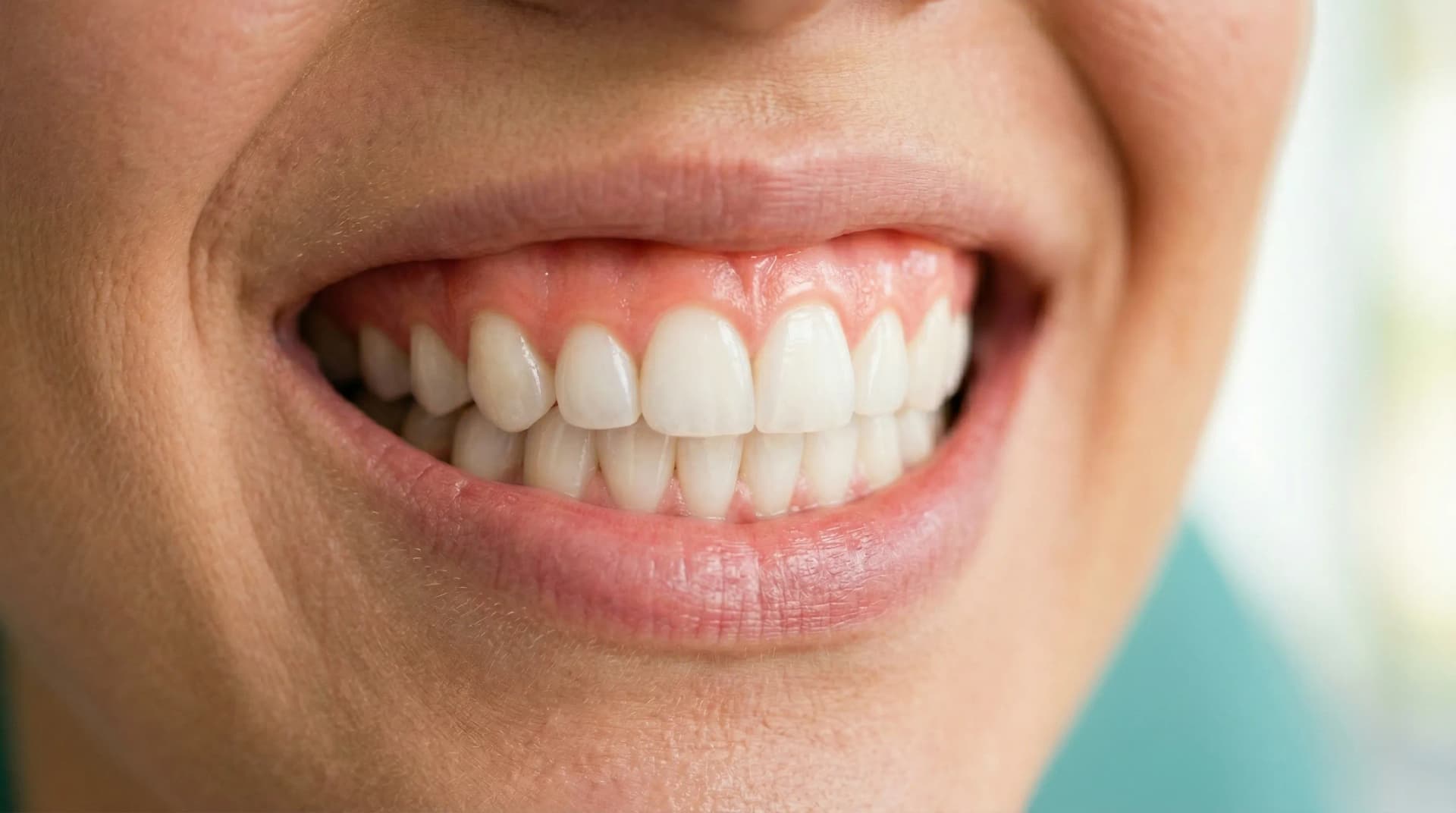
Gingival recession is the progressive loss of gum tissue that causes the gum margin to move away from the crown of the tooth, exposing the root surface. It can lead to increased tooth sensitivity, root caries, and aesthetic concerns. Recession may be caused by periodontal disease, aggressive toothbrushing, or anatomical factors. Treatment ranges from improved hygiene techniques to surgical gum grafting.
What Is Gingival Recession?
Gingival recession — commonly called receding gums — occurs when the margin of the gum tissue surrounding the teeth pulls back or wears away, exposing more of the tooth or the tooth's root surface. As the gums recede, gaps or "pockets" can form between the teeth and gum line, making it easier for disease-causing bacteria to accumulate.
The root surface, unlike the crown, is not covered by hard enamel. Instead, it is covered by cementum, a thinner and softer material that is easily damaged or worn away. Once exposed, root surfaces are vulnerable to sensitivity, abrasion, and decay.
Gingival recession is common and increases with age. Studies suggest that some degree of recession is present in over 50% of the adult population, with prevalence and severity increasing after age 40 (Journal of Clinical Periodontology, 2018).
Causes and Risk Factors
Gingival recession has multiple potential causes:
- Periodontal disease — The most common pathological cause. Periodontitis destroys the gum tissue and supporting bone, leading to recession.
- Aggressive toothbrushing — Using a hard-bristled brush or applying excessive force can physically wear away gum tissue over time
- Inadequate oral hygiene — Plaque and calculus buildup leads to inflammation and tissue destruction
- Tobacco use — Smoking impairs gum tissue health and blood flow
- Genetic predisposition — Thin gum tissue (biotype) is more susceptible to recession regardless of hygiene
- Bruxism — Teeth grinding places abnormal forces on teeth and gums
- Misaligned teeth or bite — Uneven forces can cause localized recession
- Lip or tongue piercings — Jewelry that rubs against the gums can wear away tissue
- Hormonal changes — Fluctuations during puberty, pregnancy, and menopause can affect gum sensitivity
- Orthodontic treatment — Tooth movement outside the bone envelope can contribute to recession
Symptoms
Signs and symptoms of gingival recession include:
- Teeth that appear longer than normal
- A visible notch or step where the gum meets the tooth
- Tooth sensitivity, especially near the gumline — exposed roots react to hot, cold, sweet, or acidic stimuli
- Visible root surfaces (usually yellower than the crown)
- Increased spacing between teeth near the gumline
- Root cavities (decay on exposed root surfaces)
- Bleeding during brushing or flossing if inflammation is present
Recession is often gradual, and many people do not notice it until it becomes significant. Your dentist can identify recession during routine examinations by measuring the distance from the gum margin to a fixed reference point on each tooth. For more on whether receding gums can regrow, see our detailed article on can receding gums grow back.
Treatment and Prevention
Treatment depends on the severity and cause:
Non-surgical approaches:
- Modified brushing technique — Switching to a soft-bristled brush and gentle, circular brushing motions
- Desensitizing toothpaste — Potassium nitrate or stannous fluoride products to manage root sensitivity
- Fluoride treatments — Professional fluoride varnish applied to exposed root surfaces to prevent root caries
- Dental bonding — Tooth-colored composite resin applied to cover exposed roots
- Orthodontics — Repositioning teeth within the bone envelope may improve gum coverage in select cases
Surgical approaches:
- Connective tissue graft — The most common surgical treatment. Tissue is taken from the palate (or a donor source) and sutured over the exposed root. Success rates are high for covering recession.
- Free gingival graft — Similar to connective tissue graft but uses surface tissue rather than subepithelial tissue
- Pedicle graft — Gum tissue from an adjacent area is stretched over the recession site
- Alloderm or collagen matrix — Donor tissue alternatives that eliminate the need for a palatal donor site
- Guided tissue regeneration — Used when bone loss accompanies recession
Prevention:
- Use a soft-bristled toothbrush with gentle pressure
- Brush with circular or vertical strokes rather than aggressive horizontal scrubbing
- Treat gingivitis promptly to prevent progression
- Address bruxism with a night guard
- Avoid tobacco products
- Maintain regular dental visits for early detection
- Consider removing oral piercings that contact the gums
Research in Journal of Clinical Periodontology (2020) confirms that connective tissue grafts remain the gold standard for root coverage, with average root coverage rates of 75-90% depending on the recession classification and the skill of the surgeon.
If you notice your gums receding or your teeth appearing longer, consult your dentist for a comprehensive evaluation and to discuss treatment options before further tissue is lost.