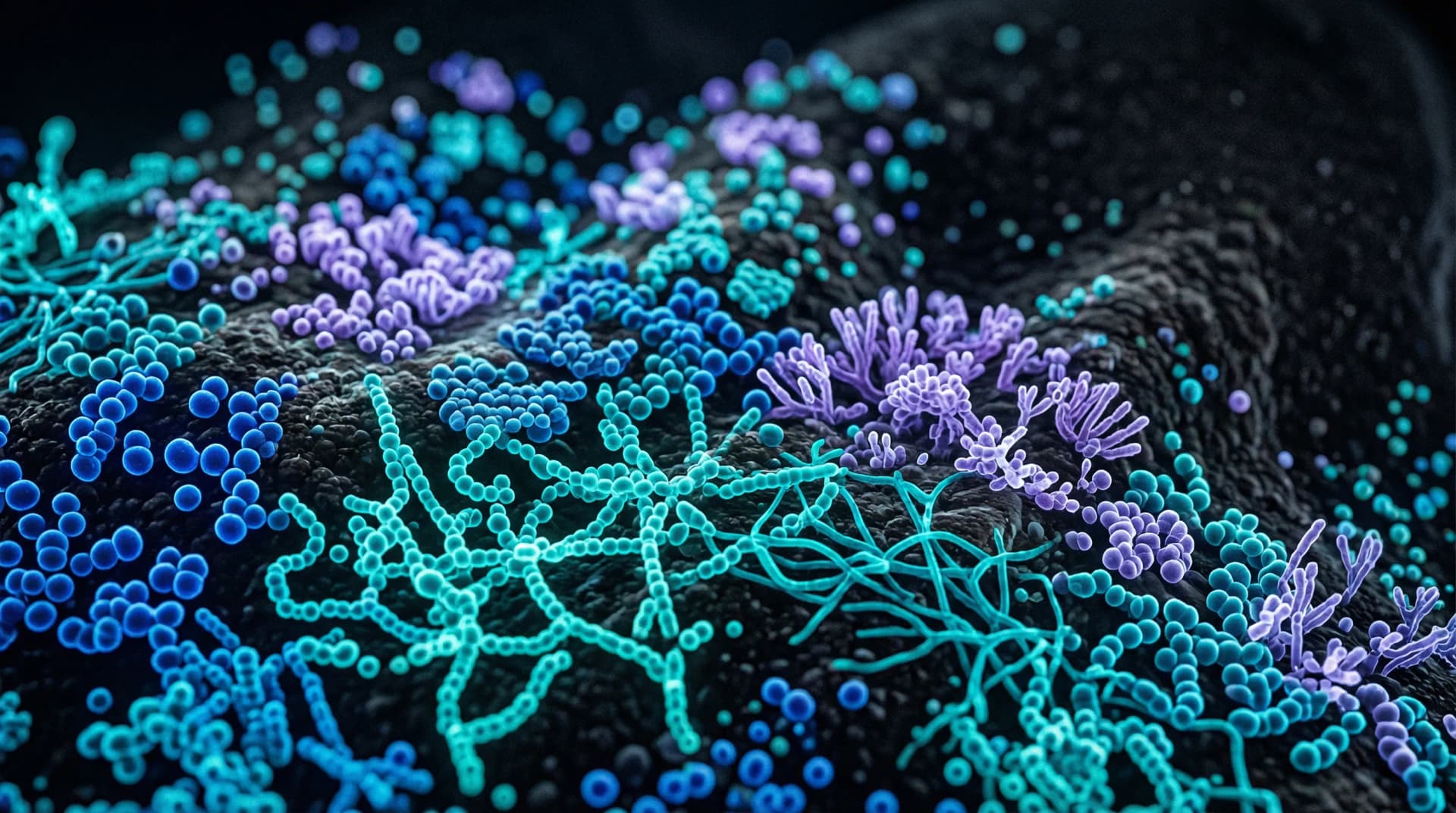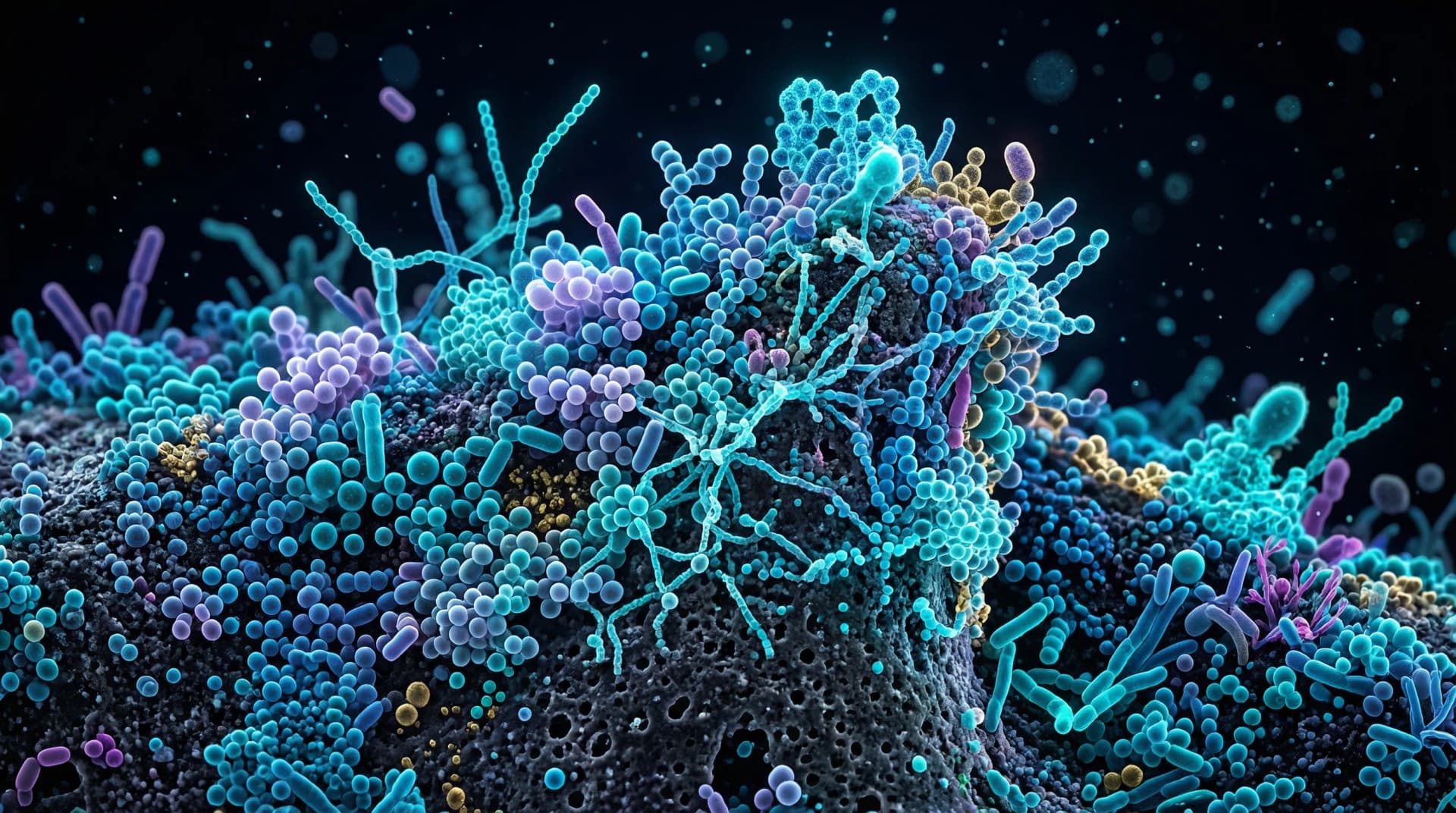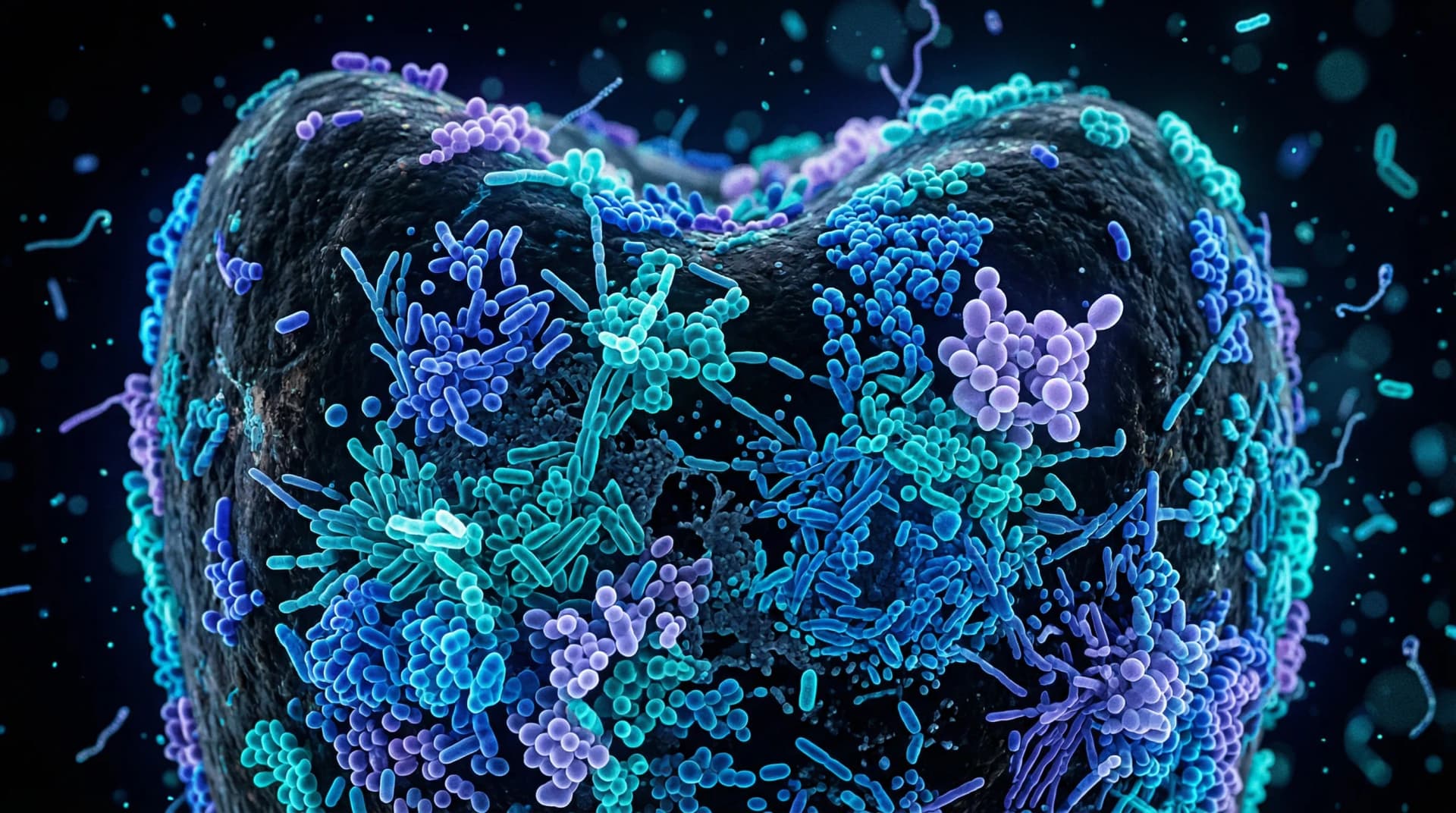
Streptococcus mutans is the single most important bacterial species in cavity formation. It causes tooth decay through a specific combination of abilities: it converts dietary sugars (especially sucrose) into lactic acid that dissolves enamel, it produces sticky glucan polymers that anchor it firmly within dental plaque, and it thrives in the acidic conditions it creates — outcompeting health-associated bacteria. Research suggests that reducing S. mutans populations through diet modification, oral hygiene, competing beneficial bacteria, and targeted interventions may significantly lower cavity risk.
If you have ever had a cavity, there is a high probability that Streptococcus mutans played a central role. This small, spherical, gram-positive bacterium has been the subject of more dental research than any other oral microorganism — and for good reason. It possesses a unique combination of traits that make it exceptionally effective at destroying tooth enamel.
Understanding S. mutans — how it operates, how it spreads, and what gives it a competitive advantage — provides a foundation for understanding why cavities form and, more importantly, how to prevent them.
What Is Streptococcus Mutans?
Streptococcus mutans is a facultatively anaerobic, gram-positive coccus (spherical bacterium) that was first isolated from human dental lesions by J. Kilian Clarke in 1924. The name "mutans" refers to the fact that the bacteria could appear in different morphological forms (mutant forms) depending on growth conditions.
It belongs to the mutans streptococci group, which includes several closely related species (S. sobrinus, S. rattus, S. cricetus), but S. mutans is the most prevalent and most studied member. It is estimated to be present in the mouths of 70-100% of the human population, though its abundance varies dramatically between individuals.
The critical distinction is between carrying S. mutans and having it dominate your oral ecosystem. Nearly everyone harbors some S. mutans, but cavities develop when this species becomes disproportionately abundant relative to competing, health-associated bacteria — a shift driven primarily by dietary sugar exposure.
How S. Mutans Causes Cavities
The cariogenic (cavity-causing) process driven by S. mutans involves several interconnected mechanisms that researchers have elucidated over decades of laboratory and clinical investigation.
Acid Production (Acidogenicity)
The most direct mechanism of enamel destruction is acid production. S. mutans metabolizes dietary sugars — glucose, fructose, and especially sucrose — through glycolysis, producing lactic acid as the primary metabolic end product. This process is rapid: within minutes of sugar exposure, S. mutans begins generating acid that lowers the pH at the tooth surface.
Tooth enamel, composed primarily of hydroxyapatite crystals, begins dissolving when the local pH drops below approximately 5.5 — the so-called "critical pH." A study published in Caries Research, 2004 measured plaque pH dynamics and found that S. mutans-rich plaque generated more sustained acid attacks after sugar exposure compared to plaque with lower S. mutans proportions.
Each time you consume sugar, this acid attack lasts approximately 20-30 minutes before saliva buffers the pH back to neutral. Frequent snacking or sipping on sugary beverages extends this acid exposure, creating cumulative enamel damage that progresses through the recognizable stages of tooth decay.
Acid Tolerance (Aciduricity)
What makes S. mutans particularly dangerous is not just that it produces acid — many oral bacteria do — but that it thrives in the acidic conditions it creates. This trait is called aciduricity: the ability to grow and metabolize at low pH levels that inhibit or kill competing species.
Research in Microbiology, 2000 demonstrated that S. mutans possesses a sophisticated acid tolerance response (ATR) system. When exposed to moderately acidic conditions, it activates genes that protect its cellular machinery from acid damage — including a membrane-bound F-ATPase proton pump that actively extrudes hydrogen ions from the cell.
This creates a self-reinforcing ecological cycle: S. mutans produces acid, the acid kills competing species that are less acid-tolerant, the reduced competition allows S. mutans to proliferate further, and the increased population produces even more acid. This positive feedback loop is the core mechanism driving cavity progression.
Biofilm Adhesion (Glucan Production)
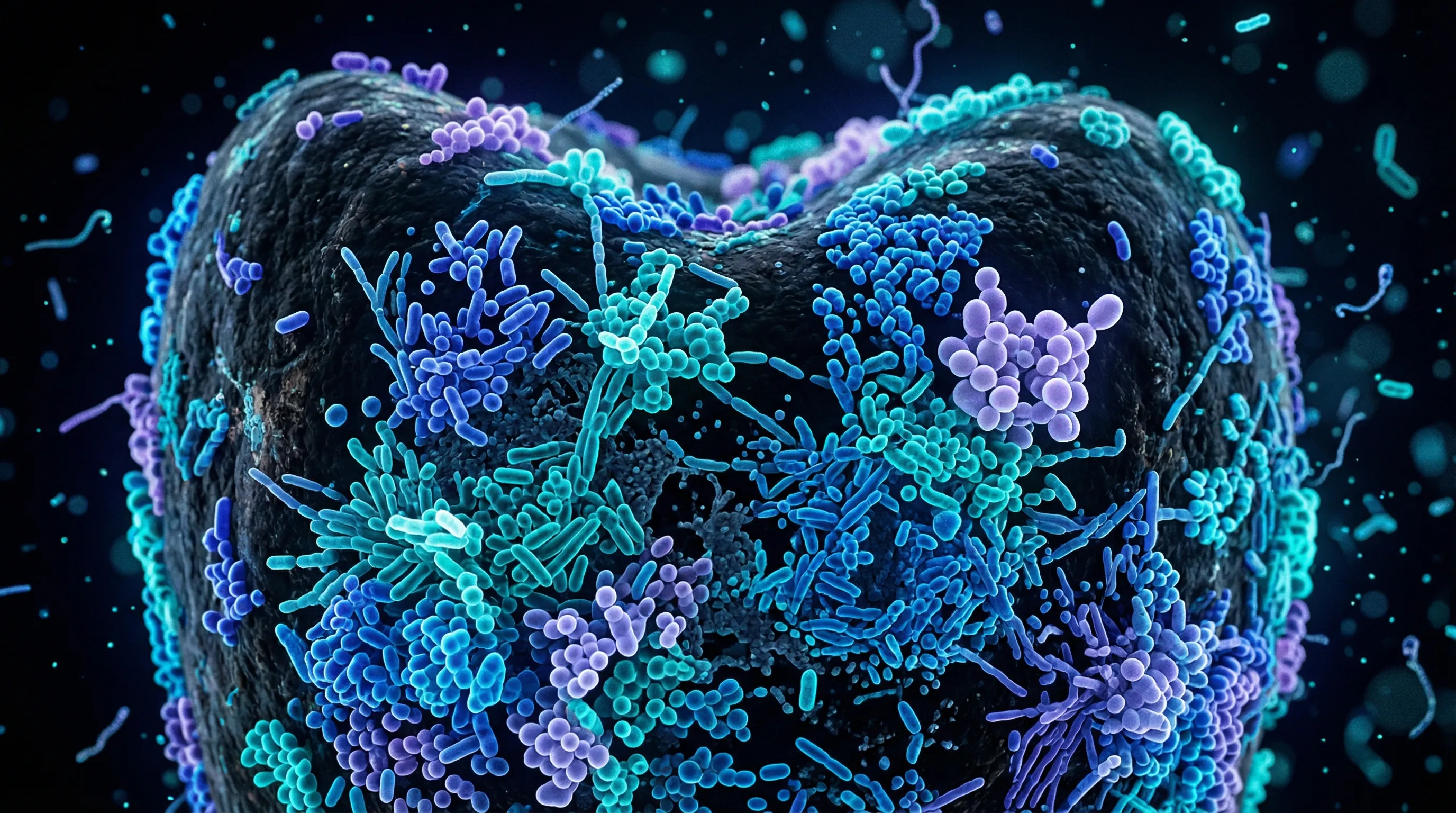
S. mutans produces enzymes called glucosyltransferases (GTFs) that convert sucrose into sticky, water-insoluble glucan polymers. These glucans serve as a structural scaffold within the dental biofilm, anchoring S. mutans cells to tooth surfaces and to each other with remarkable tenacity.
A study in the Journal of Dental Research, 2011 demonstrated that GTF-deficient mutant strains of S. mutans were significantly less cariogenic (cavity-causing) than wild-type strains, confirming that glucan-mediated adhesion is essential to the cavity-forming process.
This is also why sucrose is uniquely cariogenic compared to other sugars. While S. mutans can ferment glucose and fructose into acid, only sucrose serves as the substrate for GTF-mediated glucan production. Sucrose provides both the acid attack and the adhesion mechanism — a double threat that other sugars do not fully replicate.
Intracellular Polysaccharide Storage
S. mutans can synthesize intracellular polysaccharide (IPS) stores — essentially bacterial energy reserves made from excess dietary sugars. When external sugar sources are depleted (between meals), S. mutans metabolizes these IPS stores, continuing to produce acid even when you are not eating.
This means that S. mutans-dominant biofilm can maintain acidic conditions at the tooth surface for extended periods between meals, reducing the time available for saliva-mediated remineralization. A study in Infection and Immunity, 2006 showed that IPS metabolism during starvation conditions significantly extended the acid exposure period, contributing to the cariogenic potential of S. mutans.
Mother-to-Child Transmission
S. mutans is not present in the mouths of newborn infants. It is acquired — typically from the primary caregiver, most often the mother — during a developmental period called the "window of infectivity."
Research published in the Journal of Dental Research, 2008 established that the primary window of S. mutans acquisition occurs between approximately 19 and 31 months of age, coinciding with the eruption of primary (baby) teeth. The bacteria are transmitted through saliva — sharing utensils, pre-tasting food, cleaning a pacifier with the mouth, and kissing.
Molecular typing studies using DNA fingerprinting have confirmed that the S. mutans strains found in children's mouths are genetically identical to those found in their mothers' mouths in the majority of cases. A study in Pediatric Dentistry, 2009 found mother-child strain concordance rates exceeding 70%.
This has practical implications: mothers with high S. mutans levels are more likely to transmit the bacteria early and abundantly to their children. Some researchers have explored whether reducing maternal S. mutans levels (through xylitol use, chlorhexidine, or probiotics) could delay or reduce transmission to infants — with several studies showing promising results.
What Helps S. Mutans Thrive
Several factors create conditions that favor S. mutans dominance in the oral ecosystem:
Frequent sugar consumption — This is the single most important modifiable factor. Each sugar exposure triggers an acid attack, and the frequency of exposure matters more than the total amount. Sipping a sugary drink over two hours causes far more damage than consuming the same amount of sugar in five minutes, because the extended exposure prevents pH recovery between attacks.
Dry mouth (xerostomia) — Saliva is the mouth's primary defense against S. mutans. It buffers acid, provides calcium and phosphate for remineralization, and contains antimicrobial proteins (lysozyme, lactoferrin, salivary peroxidase) that suppress bacterial growth. When saliva flow is reduced — due to medications, mouth breathing, dehydration, or medical conditions — S. mutans gains a significant advantage. Understanding dry mouth and its effects on oral health is essential for managing cavity risk.
Low salivary pH — Individuals whose resting salivary pH is naturally lower (more acidic) provide a more hospitable environment for acid-tolerant species like S. mutans and a less hospitable one for competing health-associated species.
Poor oral hygiene — Infrequent or ineffective brushing and flossing allows biofilm to mature, creating the anaerobic, undisturbed conditions where S. mutans populations expand. The relationship between biofilm maturation and pathogenic succession is well established.
Antibiotic use — Broad-spectrum antibiotics can disrupt the oral microbiome, potentially reducing competing species and creating ecological space for S. mutans to expand during recolonization.
How to Reduce S. Mutans Naturally
While completely eliminating S. mutans from the mouth is neither possible nor necessarily desirable (it may play ecological roles we do not yet understand), reducing its dominance is a well-supported strategy for cavity prevention.
Dietary Modification
Reducing sugar frequency is the most evidence-based intervention. The landmark Vipeholm dental caries study, published in Acta Odontologica Scandinavica, 1954, established that the frequency of sugar consumption — not the total amount — was the primary dietary determinant of caries risk. Limiting sugary snacks and beverages between meals reduces the number of acid attacks per day and allows saliva more time to buffer pH and promote remineralization of enamel.
Xylitol is a sugar alcohol that S. mutans takes up but cannot metabolize. The bacteria expend energy transporting xylitol into the cell, but receive no metabolic benefit — a process called "futile cycling" that reduces S. mutans growth. A systematic review in BMC Oral Health, 2017 found that regular xylitol consumption (typically 5-10 grams per day via chewing gum) was associated with reduced S. mutans counts and lower caries incidence.
Oral Hygiene
Consistent brushing twice daily with fluoride toothpaste and daily interdental cleaning physically disrupts the biofilm before S. mutans can establish dominance. Fluoride provides additional protection by inhibiting bacterial acid production (at low concentrations, fluoride interferes with the enolase enzyme in the glycolytic pathway) and by promoting remineralization of early enamel lesions.
Competing Beneficial Bacteria
Perhaps the most intriguing approach to reducing S. mutans is ecological: introducing or supporting competing beneficial species that limit S. mutans expansion through direct competition.
Streptococcus salivarius — This naturally abundant oral commensal produces bacteriocins (salivaricin A and B) that inhibit S. mutans. The M18 strain was specifically selected for its anti-caries properties. A clinical trial in Clinical Oral Investigations, 2015 found that children given S. salivarius M18 lozenges showed reduced plaque scores and lower S. mutans counts.
Lactobacillus reuteri — Produces the broad-spectrum antimicrobial compound reuterin. Multiple clinical trials have demonstrated that L. reuteri supplementation reduces salivary S. mutans levels. A study in Caries Research, 2009 found significant S. mutans reductions in school-aged children consuming L. reuteri-enriched milk.
Lactobacillus paracasei — Demonstrates the ability to co-aggregate with S. mutans, physically binding to the pathogen and interfering with its attachment to tooth surfaces. This mechanism was documented in the Journal of Applied Microbiology, 2014.
These competing bacteria do not eliminate S. mutans — they reduce its dominance by occupying ecological niches, producing inhibitory compounds, and shifting the microbial balance toward a less cariogenic community.
ProDentim
Oral Probiotic for Gum & Teeth Health
ProDentim combines L. reuteri and L. paracasei — two of the most studied probiotic strains for S. mutans reduction — in an oral dissolving tablet that delivers beneficial bacteria directly to the tooth and gum surfaces where S. mutans resides. It represents an ecological approach to cavity prevention.
We may earn a commission if you make a purchase through our links, at no extra cost to you.
S. Mutans in Context: It's Not the Whole Story
While S. mutans is the most important single species in cavity formation, modern caries research recognizes that tooth decay is an ecological disease involving the entire microbial community. The "extended ecological plaque hypothesis," proposed by Philip Marsh in Advances in Dental Research, 1994 and refined over subsequent decades, holds that cavities result from an overall shift in microbial community composition driven by environmental factors (sugar, pH, saliva) rather than from a single "infectious" organism.
This means that focusing solely on killing S. mutans — without addressing the environmental conditions that favor it — is unlikely to provide lasting protection. The most effective cavity prevention strategy addresses the ecosystem: reduce sugar frequency (removing the selective pressure for acid-tolerant species), maintain saliva flow (preserving the buffering and antimicrobial capacity), clean regularly (resetting the biofilm), support beneficial species, and consult your dentist for personalized risk assessment and professional care.
This article is for educational purposes only and does not constitute medical advice. Always consult your dentist or healthcare provider for personalized guidance on cavity prevention.
Related reading:
- Can probiotics prevent cavities?
- The role of Lactobacillus reuteri in oral health
- Vitamins for teeth and gums