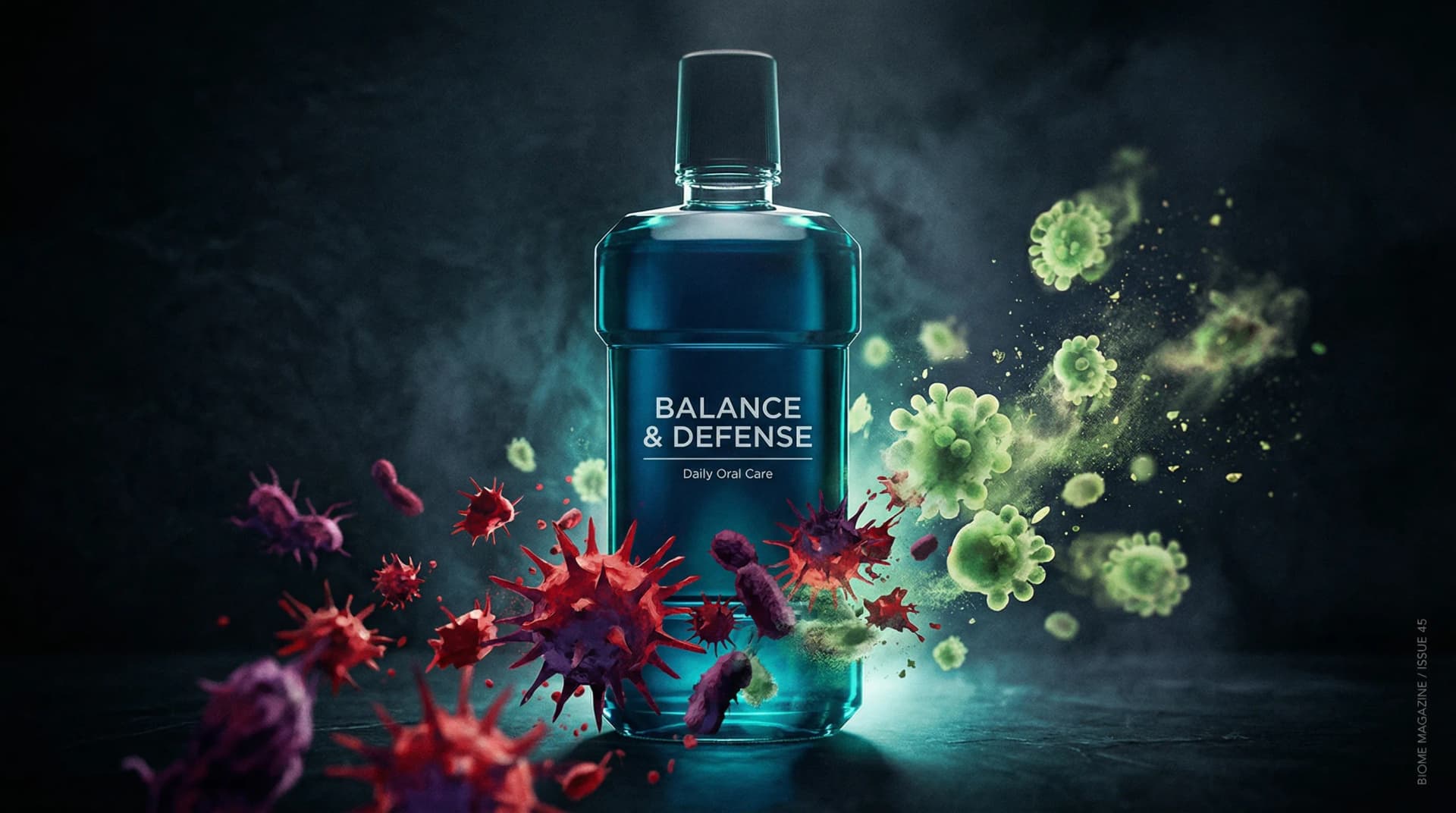
Antiseptic mouthwashes containing chlorhexidine or high concentrations of alcohol kill bacteria indiscriminately — wiping out beneficial species alongside harmful ones. Research suggests this may disrupt nitric oxide production, potentially affecting blood pressure regulation. While short-term therapeutic use (such as post-surgical recovery) is well-justified, daily long-term use of antiseptic mouthwash deserves reconsideration. Gentler alternatives exist that support rather than destroy your oral microbiome.
Mouthwash feels like it is doing something good. That burning sensation, the minty freshness, the satisfying swish — it seems like a logical finishing step after brushing and flossing. But a growing body of research is raising questions about whether daily antiseptic mouthwash use may be doing more harm than good to the complex bacterial ecosystem in your mouth.
Your Mouth Needs Bacteria — The Right Bacteria
Before we can understand why mouthwash may be problematic, we need to reframe how we think about oral bacteria.
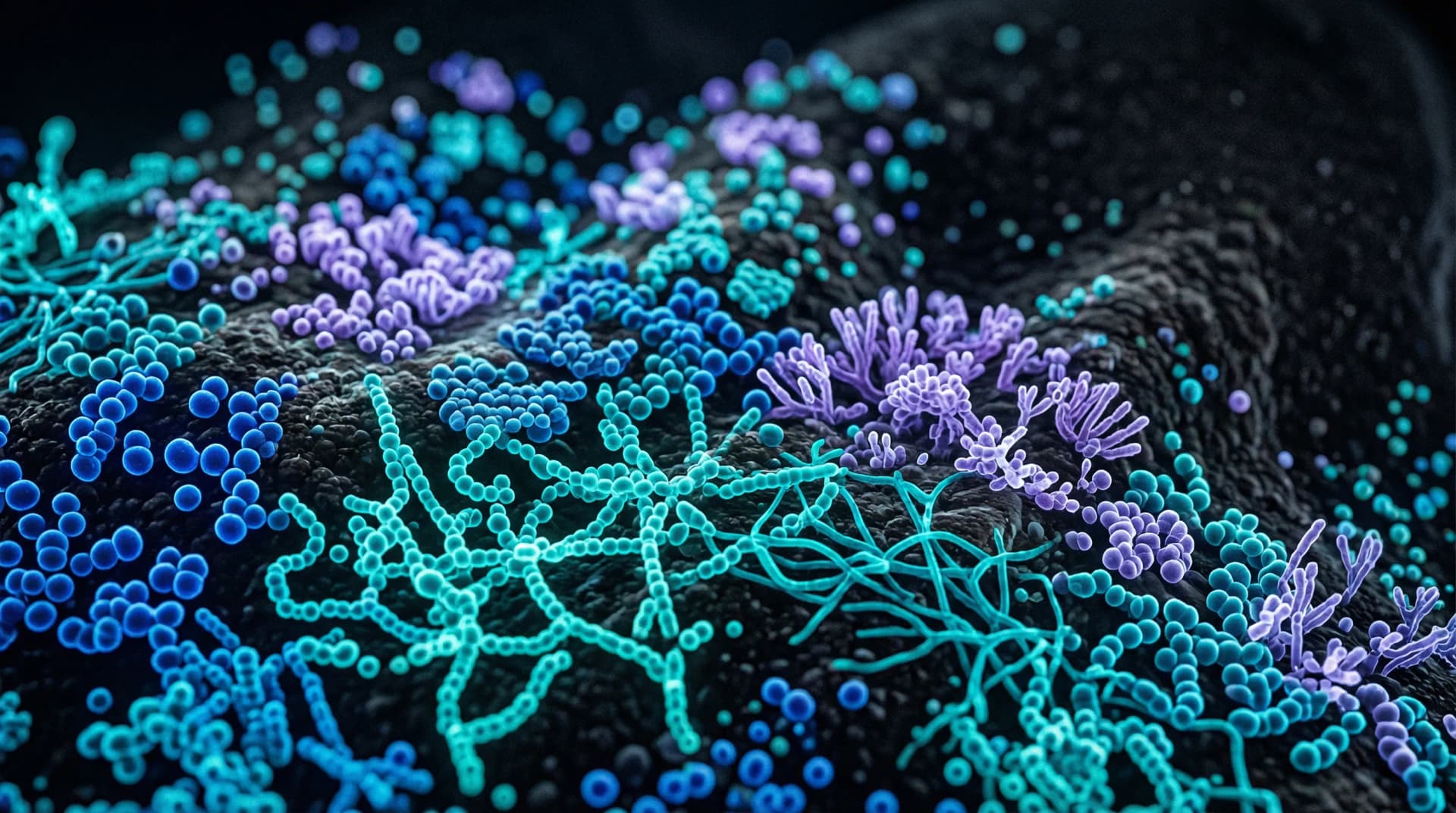
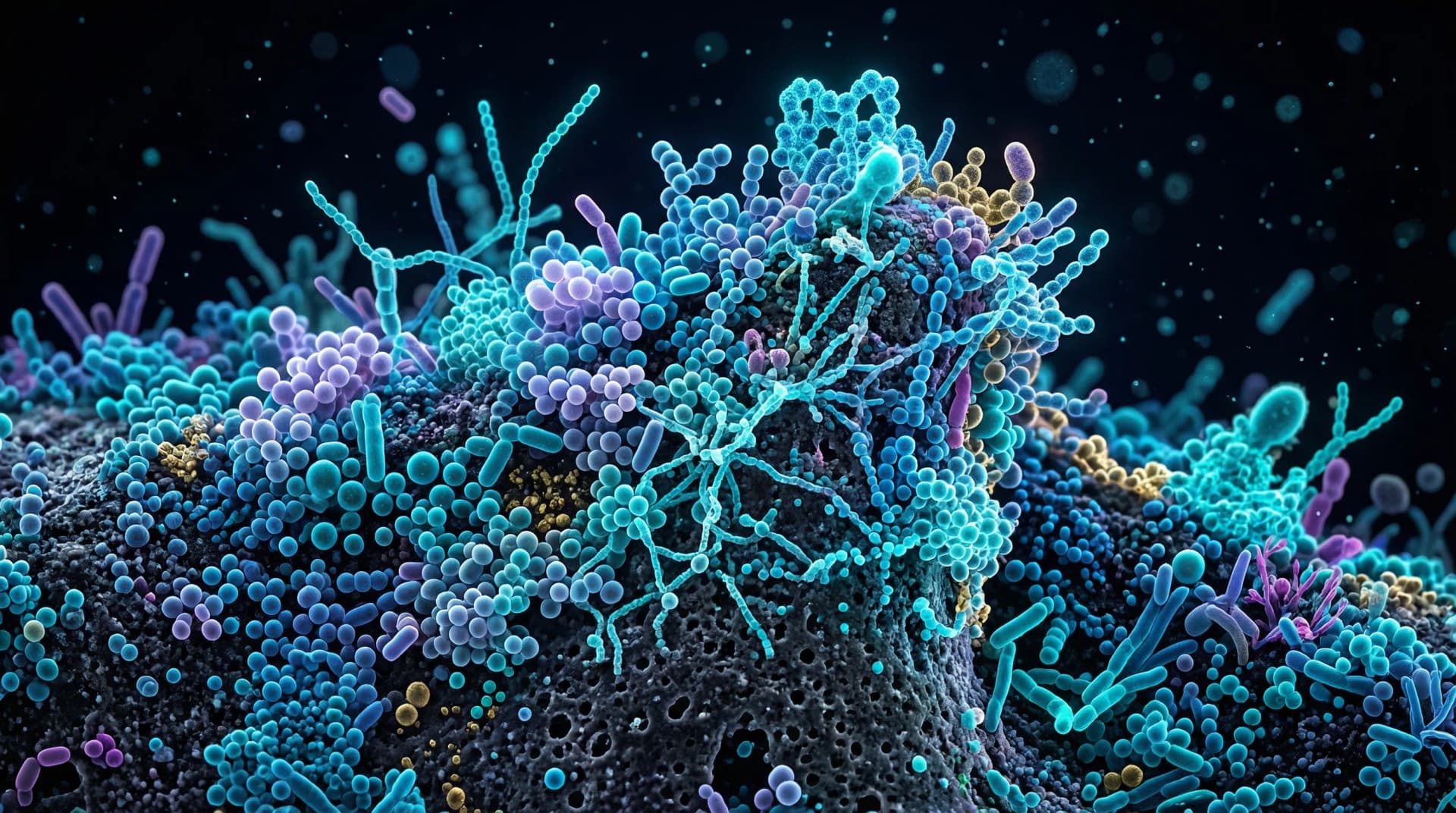
The human mouth contains around 700 identified bacterial species. A healthy oral microbiome is not one that is bacteria-free — it is one where beneficial and commensal (neutral) bacteria keep pathogenic species in check. Research from the Human Microbiome Project, published in Nature, 2012, established that microbial diversity in the mouth is a marker of health, not disease.
Beneficial oral bacteria perform critical functions:
- Nitric oxide production — Certain oral bacteria (particularly Veillonella and Actinomyces) reduce dietary nitrate to nitrite, which the body converts to nitric oxide. This pathway is essential for blood pressure regulation and cardiovascular health.
- Pathogen resistance — Commensal bacteria compete with pathogens for space and nutrients, a concept known as colonization resistance.
- pH regulation — Some beneficial species help neutralize acids in the mouth, protecting tooth enamel.
- Immune modulation — The oral microbiome interacts with mucosal immune cells, helping calibrate appropriate inflammatory responses.
When you use an antiseptic mouthwash, you are not surgically removing the bad actors. You are carpet-bombing the entire community.
How Antiseptic Mouthwashes Work
The two most common antimicrobial agents in mouthwash are chlorhexidine and alcohol (ethanol).
Chlorhexidine
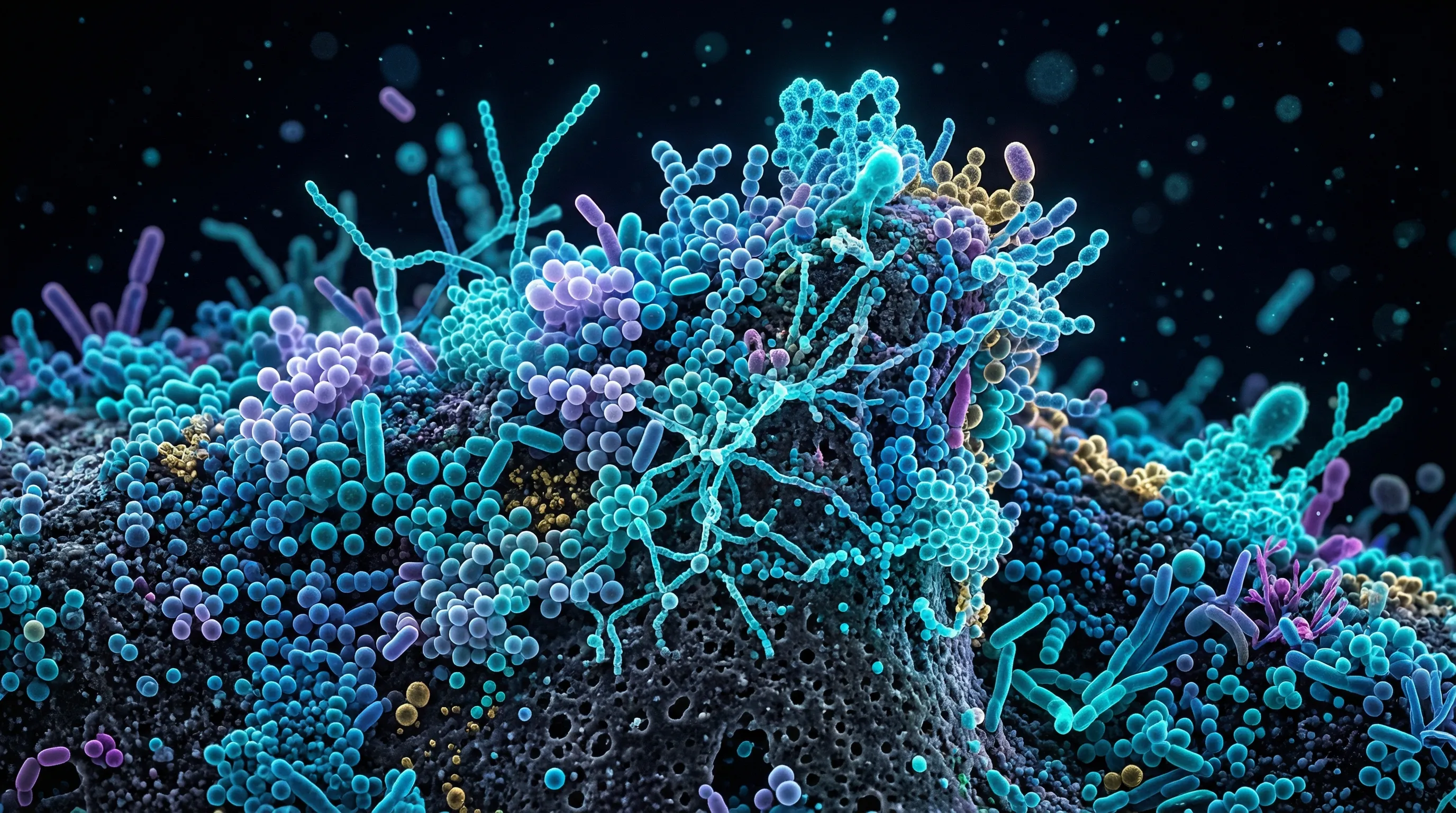
Chlorhexidine gluconate (CHX) is the gold standard prescription mouthwash. It is a broad-spectrum antimicrobial that disrupts bacterial cell membranes. It is highly effective — which is precisely the problem for long-term use. A 2020 study published in Scientific Reports, 2020 analyzed the oral microbiomes of participants using chlorhexidine mouthwash twice daily for seven days and found significant shifts in microbial community composition. The researchers observed an increase in Firmicutes and Proteobacteria and a decrease in Bacteroidetes, with a notable reduction in species associated with nitrate reduction.
Chlorhexidine is genuinely useful in specific clinical contexts — post-surgical healing, short-term management of acute gum infections, and situations where mechanical cleaning is not possible. No one is disputing its clinical value when prescribed appropriately.
Alcohol-Based Mouthwashes
Many over-the-counter mouthwashes contain 18-26% ethanol — a concentration high enough to kill bacteria on contact. A 2008 study in the Australian Dental Journal, 2008 raised concerns about the long-term oral health effects of alcohol-containing mouthwash, noting that alcohol dries out the oral mucosa and may contribute to an environment that paradoxically favors certain harmful bacteria.
The alcohol also causes the burning sensation that many people associate with "effectiveness." But that sensation has nothing to do with selective antimicrobial action — it is simply tissue irritation.
The Nitric Oxide Connection
Perhaps the most striking research on mouthwash and health involves its effects on nitric oxide production — and through that pathway, blood pressure.
The oral cavity is the first step in the nitrate-nitrite-nitric oxide pathway. When you eat nitrate-rich foods like leafy greens and beets, specific oral bacteria on the tongue reduce nitrate (NO3-) to nitrite (NO2-). This nitrite is then swallowed and converted to nitric oxide (NO) in the stomach and bloodstream. Nitric oxide is a potent vasodilator — it relaxes blood vessel walls and helps regulate blood pressure.
A landmark 2019 study published in Free Radical Biology and Medicine, 2019 by researchers at the University of Texas at Austin examined the effects of chlorhexidine mouthwash on blood pressure. Participants who used chlorhexidine mouthwash twice daily experienced a statistically significant increase in systolic blood pressure compared to controls. The researchers attributed this to the destruction of nitrate-reducing bacteria on the tongue, effectively shutting down the oral step of the nitrate-nitrite-NO pathway.
A 2017 study in Frontiers in Cellular and Infection Microbiology, 2017 further demonstrated that antiseptic mouthwash blunted the blood pressure-lowering effects of exercise by disrupting oral nitrate reduction. The finding was notable: the cardiovascular benefit of exercise was partially dependent on bacteria in the mouth.
These findings do not mean that mouthwash will cause hypertension in everyone. But they suggest that for individuals with borderline blood pressure or those relying on dietary nitrate for cardiovascular support, daily antiseptic mouthwash use may be counterproductive.
Beyond Blood Pressure: Other Concerns
Microbial Rebound and Dysbiosis
When you eliminate most oral bacteria with an antiseptic rinse, the recovery process is not orderly. Fast-growing, opportunistic species tend to recolonize first, potentially creating a less diverse and less healthy microbiome than you started with. A 2018 study in ISME Journal, 2018 observed that post-mouthwash microbial recovery favored certain pathogenic species over the commensal bacteria that had been displaced.
Dry Mouth
Alcohol-based mouthwashes reduce saliva flow temporarily and dry the oral mucosa. Saliva is your mouth's primary defense mechanism — it contains antimicrobial peptides, buffers acids, and physically washes bacteria from surfaces. People already dealing with dry mouth at night should be especially cautious, as mouthwash can compound the problem. Paradoxically, using mouthwash to "clean" your mouth may impair the natural cleaning system that saliva provides.
Oral Microbiome Diversity
A 2020 study in the Journal of Oral Microbiology, 2020 found that regular mouthwash users had significantly lower oral microbial diversity compared to non-users. Reduced diversity has been associated with higher susceptibility to opportunistic infections and slower recovery from oral health disruptions.
When Mouthwash IS Appropriate
This is not an anti-mouthwash manifesto. There are clear, evidence-based situations where antiseptic mouthwash is the right choice:
- After oral surgery — Post-extraction or post-periodontal surgery, chlorhexidine rinses reduce infection risk during a critical healing window. Your dentist or oral surgeon will typically prescribe it for 7-14 days.
- Acute periodontal infections — When active infection needs to be controlled before definitive treatment, short-term antimicrobial rinses are appropriate.
- Patients who cannot brush — Due to disability, injury, or medical conditions that make mechanical cleaning impossible, mouthwash serves as a necessary substitute.
- Pre-procedural rinses — Dentists often use chlorhexidine rinse before procedures to reduce bacterial load temporarily, which is a single-use application.
The common thread is that these are short-term, clinically directed uses — not daily habits sustained over months or years. If your dentist has prescribed mouthwash for a specific condition, follow their guidance. And if you are unsure about your routine, consult your dentist about whether daily mouthwash use is necessary for your situation.
Healthier Alternatives to Daily Antiseptic Mouthwash
If you want the fresh-mouth feeling without the collateral damage, several alternatives may be worth considering:
1. Saltwater Rinses
A simple saline rinse (1/2 teaspoon salt in 8 ounces of warm water) has mild antimicrobial properties and promotes healing without the broad-spectrum destruction of antiseptic mouthwash. A 2017 review in PLOS ONE, 2017 noted that saline rinses effectively reduced bacterial counts with fewer negative effects on beneficial species.
2. Prebiotic and Probiotic Rinses
An emerging category of oral care products uses prebiotic compounds (like hydroxyapatite or arginine) or probiotic bacteria to support beneficial microbes rather than kill all bacteria indiscriminately. These products are based on the principle of "rebalancing" rather than "sterilizing."
3. Xylitol Rinses
Xylitol is a sugar alcohol that harmful bacteria (particularly Streptococcus mutans) cannot metabolize effectively. When these bacteria take up xylitol, their growth and acid production are inhibited, while beneficial species remain largely unaffected. A 2017 systematic review in the Journal of Natural Science, Biology and Medicine, 2017 found that xylitol use was associated with reduced cavity risk.
4. Hydroxyapatite Toothpaste (As a Replacement Strategy)
Rather than adding a mouthwash step, some people are switching to hydroxyapatite toothpaste, which supports enamel remineralization without antimicrobial effects. This approach strengthens teeth through a mineral pathway rather than a bacterial-killing pathway.
5. Oral Probiotics
Rather than destroying your oral microbiome and hoping it recovers well, oral probiotics take the opposite approach: they introduce beneficial bacteria to help outcompete pathogens naturally. Strains like Lactobacillus reuteri and Streptococcus salivarius K12 have been shown to reduce pathogenic bacteria and volatile sulfur compounds without harming commensal species.
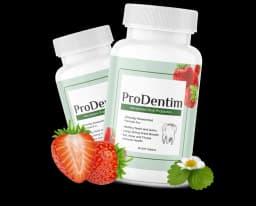
ProDentim
Oral Probiotic for Gum & Teeth Health
ProDentim offers a probiotic-based approach to oral care, delivering beneficial strains like L. reuteri and L. paracasei directly to the oral cavity — supporting microbial balance rather than destroying it.
We may earn a commission if you make a purchase through our links, at no extra cost to you.
Rethinking the "Kill Everything" Approach
The broader shift in oral microbiology is away from a sterilization mindset and toward an ecological one. Just as gut health research has moved beyond "good bacteria vs. bad bacteria" into understanding complex microbial ecosystems, oral health is following the same trajectory.
The question is not "how do I kill all the bacteria in my mouth?" It is "how do I create an environment where the right bacteria thrive?"
This means:
- Brushing and flossing remain the foundation — they mechanically disrupt pathogenic biofilms without the indiscriminate chemical killing of mouthwash
- Diet matters — sugar feeds cavity-causing bacteria; fiber and nitrate-rich vegetables support beneficial species. Explore foods that promote gum health for specific guidance
- Targeted support through oral probiotics may help tip the microbial balance in a favorable direction
- Reserving antiseptic mouthwash for clinical situations where the benefit clearly outweighs the microbiome disruption
The Bottom Line
Antiseptic mouthwash is a powerful tool — and like any powerful tool, it can cause collateral damage when used casually. The research increasingly suggests that daily, long-term use of chlorhexidine or alcohol-based mouthwash may reduce beneficial oral bacteria, disrupt nitric oxide production, and decrease microbial diversity.
For most people with healthy mouths, good brushing technique, daily flossing, and regular dental visits may be all the mouth care needed. If you want to add something beyond the basics, microbiome-supporting approaches like oral probiotics, xylitol, or saltwater rinses may offer benefits without the tradeoffs.
Talk to your dentist about what makes sense for your individual oral health situation — especially if you have been using antiseptic mouthwash daily for an extended period.
Related reading: